

A sealed ER collet system is an enhancement of the standard ER collet, designed to prevent coolant, dust, chips, and other contaminants from entering the critical interface between the collet, the tool holder, and the machine spindle. This is crucial for maintaining precision, protecting spindle bearings, and ensuring tool life in demanding machining environments.
The sealing function is not performed by the collet itself, but by the integration of specific components in the tool holder and the collet nut.
Key Components:
1. ER Collet: The slotted, flexible sleeve that contracts to grip the tool. It has a precise taper on its outside diameter.
2. Sealed Tool Holder: The main body that houses the collet. Its nose is machined with a special groove or channel for a seal.
3. O-Ring / Seal: A resilient elastomer ring (typically Viton or Nitrile) seated in the groove of the tool holder's nose.
4. Sealed Collet Nut: A special nut that incorporates a matching flat, hardened face designed to compress against the O-ring.
The Working Principle:
The sealing action occurs simultaneously with the tool clamping action when the collet nut is tightened.
1. The Clamping Action (Standard ER Function):
* The ER collet is placed into the tapered bore of the tool holder.
* As the collet nut is threaded onto the holder, it pulls the collet into the taper.
* This axial force causes the slotted, flexible front end of the collet to contract radially, gripping the tool shank with immense, uniform force.
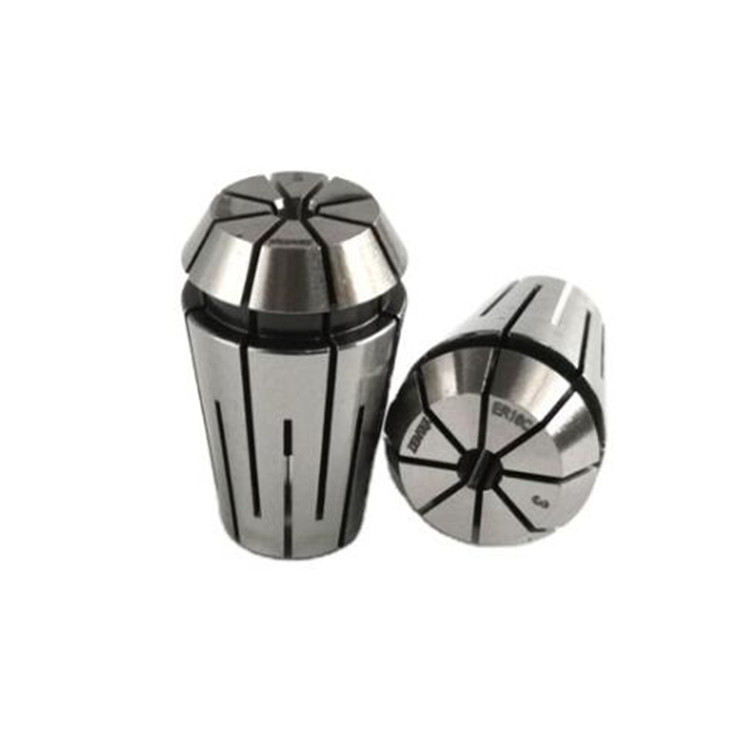
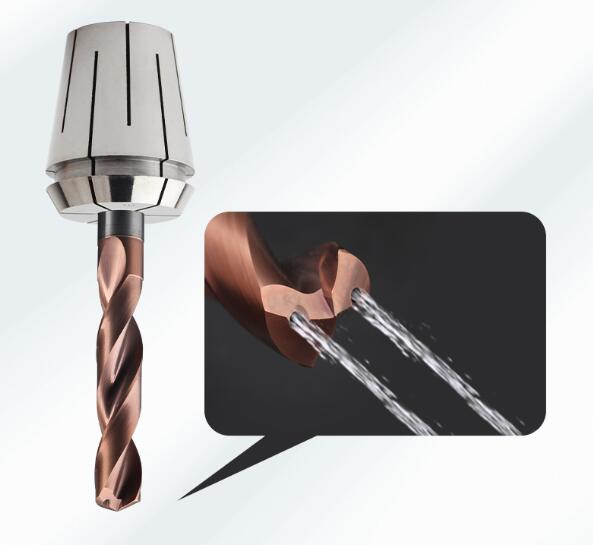
2. The Sealing Action (The Enhanced Feature):
* Concurrently with the clamping action, the sealed collet nut travels axially towards the nose of the tool holder.
* The flat, machined face on the inside of the nut makes contact with the O-ring seated in the holder's nose.
* As the nut is torqued to its final specification, it compresses the O-ring, creating a tight, static seal in the annular gap between the nut and the tool holder.
* This seal effectively closes off the front of the tool holder assembly.
The Result: A Protected System
This compressed O-ring seal acts as a physical barrier, preventing contaminants from:
* Entering the gap between the collet nut and the tool holder.
* Traveling backwards and contaminating the collet's precision taper.
* Reaching the machine spindle's taper and bearings.
This is especially critical in high-pressure coolant applications, where coolant could otherwise be forced past a standard collet nut, carrying abrasive metal chips with it.
Core Mechanism in Summary:
The sealed ER collet system integrates a face seal mechanism directly into the tool clamping assembly. The fundamental principle is axial compression of an elastomeric O-ring between two hard, flat surfaces (the tool holder nose and the collet nut). This creates a hermetic barrier that protects the internal components without interfering with the primary radial clamping force of the ER collet itself.