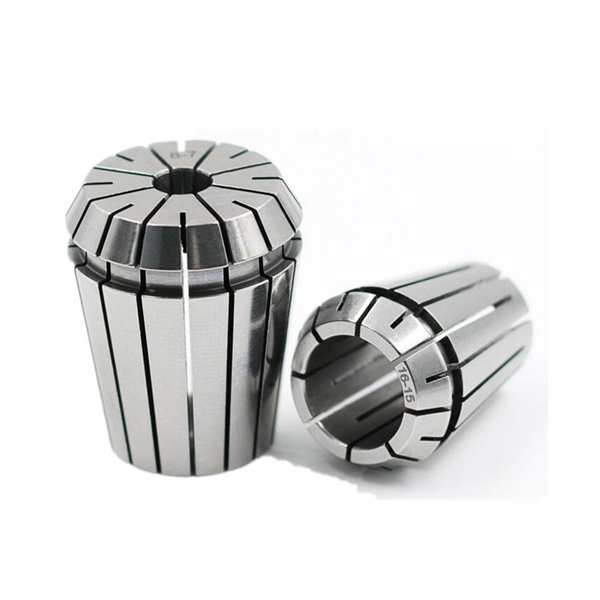
Advantages of ER Collets in Precision Machining
ER collets are widely regarded as one of the most versatile and reliable tool-holding systems in machining and CNC applications. Their design and functionality offer numerous advantages, making them a preferred choice for professionals across industries. Below are the key benefits of ER collets:
ER collets are widely regarded as one of the most versatile and reliable tool-holding systems in machining and CNC applications. Their design and functionality offer numerous advantages, making them a preferred choice for professionals across industries. Below are the key benefits of ER collets:
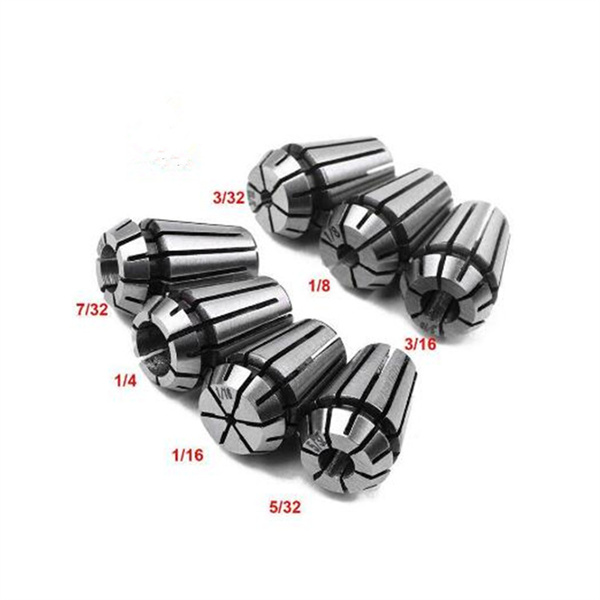
1. cnc er collet High Clamping Force and Precision
ER collets excel in providing uniform clamping force around the tool or workpiece. Their spring-like design ensures consistent radial pressure, minimizing slippage even during high-speed or heavy-duty operations. This results in exceptional gripping accuracy, often achieving concentricity within 0.0005 inches (0.0127 mm), which is critical for precision machining tasks.
ER collets excel in providing uniform clamping force around the tool or workpiece. Their spring-like design ensures consistent radial pressure, minimizing slippage even during high-speed or heavy-duty operations. This results in exceptional gripping accuracy, often achieving concentricity within 0.0005 inches (0.0127 mm), which is critical for precision machining tasks.
2. Broad Compatibility and Flexibility
The ER collet system accommodates a wide range of tool or workpiece diameters with a single collet nut. For example, an ER-32 collet can grip sizes from 1/16" to 13/16" (2–21 mm) by simply adjusting the collet. This flexibility reduces the need for multiple collet sets, streamlining tool management and lowering costs.
The ER collet system accommodates a wide range of tool or workpiece diameters with a single collet nut. For example, an ER-32 collet can grip sizes from 1/16" to 13/16" (2–21 mm) by simply adjusting the collet. This flexibility reduces the need for multiple collet sets, streamlining tool management and lowering costs.
3. Enhanced Tool Life and Stability
The even distribution of clamping force reduces stress concentrations on cutting tools, minimizing wear and extending tool life. Additionally, ER collets dampen vibrations effectively, improving surface finish quality and reducing the risk of tool breakage during intricate operations.
4. Quick and Easy Tool Changes
ER collets feature a simple two-part design (collet and nut) that allows for rapid tool changes. This modularity boosts productivity in high-mix manufacturing environments where frequent tool swaps are required.
The even distribution of clamping force reduces stress concentrations on cutting tools, minimizing wear and extending tool life. Additionally, ER collets dampen vibrations effectively, improving surface finish quality and reducing the risk of tool breakage during intricate operations.
4. Quick and Easy Tool Changes
ER collets feature a simple two-part design (collet and nut) that allows for rapid tool changes. This modularity boosts productivity in high-mix manufacturing environments where frequent tool swaps are required.
5. Heat Resistance and Durability
Constructed from hardened and tempered spring steel, ER collets withstand high temperatures generated during machining. Many are further treated with nitriding or coatings to enhance wear resistance, ensuring longevity even under demanding conditions.
6. Cost-Effectiveness
Compared to specialized collet systems (e.g., TG or DA-style), ER collets are more affordable and widely available. Their standardized dimensions (governed by DIN 6499) ensure compatibility across brands, providing users with cost-efficient purchasing options.
Constructed from hardened and tempered spring steel, ER collets withstand high temperatures generated during machining. Many are further treated with nitriding or coatings to enhance wear resistance, ensuring longevity even under demanding conditions.
6. Cost-Effectiveness
Compared to specialized collet systems (e.g., TG or DA-style), ER collets are more affordable and widely available. Their standardized dimensions (governed by DIN 6499) ensure compatibility across brands, providing users with cost-efficient purchasing options.
7. Versatile Applications
ER collets are used not only for holding cutting tools (end mills, drills, reamers) but also for securing workpieces in lathes or grinding machines. Their adaptability makes them suitable for milling, drilling, tapping, and even 3D printing extruder assemblies.
8. Compact Design
With a slim profile, ER collets fit into tight spaces and smaller spindles, making them ideal for micro-machining or applications requiring minimal overhang.
Conclusion
The ER collet system combines precision, flexibility, and durability in a cost-effective package. Its ability to balance high-performance clamping with user-friendly operation explains its enduring popularity in workshops worldwide. Whether for prototyping, production runs, or complex multi-axis machining, ER collets remain a cornerstone of efficient and accurate manufacturing.
ER collets are used not only for holding cutting tools (end mills, drills, reamers) but also for securing workpieces in lathes or grinding machines. Their adaptability makes them suitable for milling, drilling, tapping, and even 3D printing extruder assemblies.
8. Compact Design
With a slim profile, ER collets fit into tight spaces and smaller spindles, making them ideal for micro-machining or applications requiring minimal overhang.
Conclusion
The ER collet system combines precision, flexibility, and durability in a cost-effective package. Its ability to balance high-performance clamping with user-friendly operation explains its enduring popularity in workshops worldwide. Whether for prototyping, production runs, or complex multi-axis machining, ER collets remain a cornerstone of efficient and accurate manufacturing.